
Monster Studio: Music Beats
Tappy GameCasual
3.0116.00 Reviews
- Version
- 1.6.1
- Installs
- 10.00M
- Age Rating
- Everyone
Screenshots
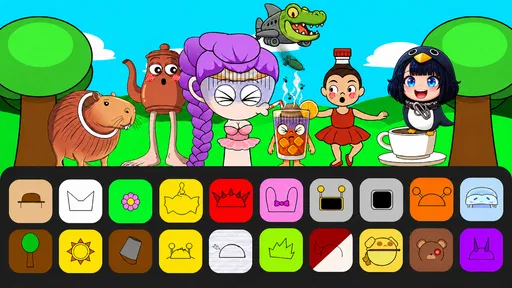
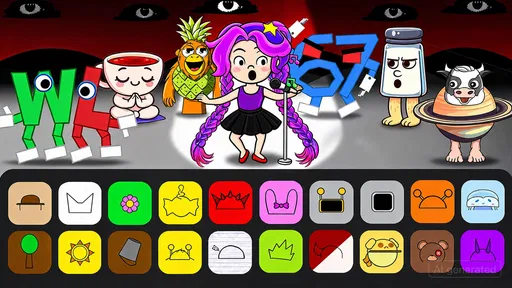
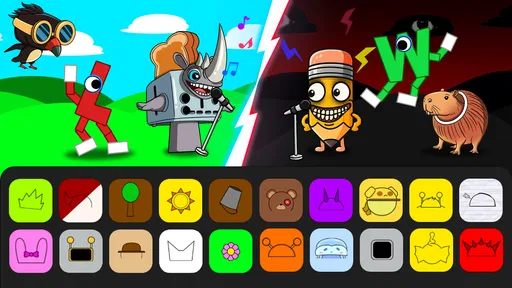
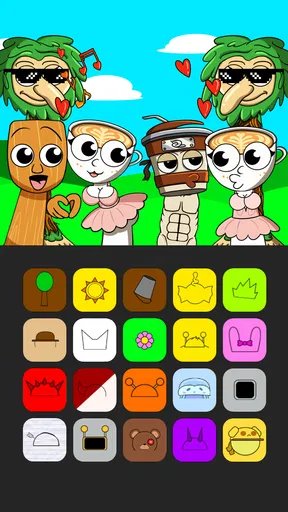
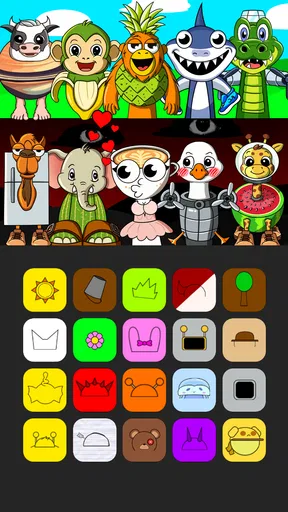
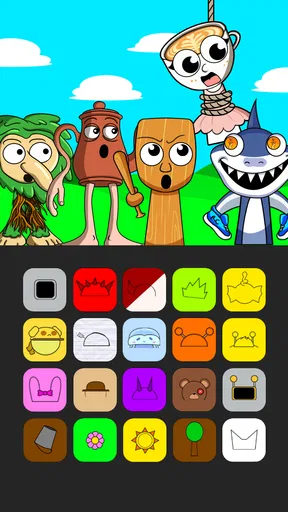
Our Review of Monster Studio: Music Beats
 Analysis by Appyee
I approached Monster Studio: Music Beats expecting a light musical toy rather than a full music-production tool, and that is exactly where it makes the most sense. The game puts its attention on discovering monster characters, combining their individual sounds, and building a track that feels like your own. It is a casual game from Tappy Game, available for free, with an Everyone age rating, so the basic appeal is easy to understand: tap, listen, rearrange, and enjoy the result without needing musical training.
What makes the experience more interesting than a simple soundboard is the small creative decision behind every combination. One monster may give a rhythm a stronger pulse, while another can make the same arrangement feel busier or more playful. I found myself listening less for a traditional “correct” answer and more for combinations that matched the mood I wanted. That gives the game a relaxed quality, although it also means that players looking for deep progression or a demanding challenge may find it limited.
How the current version feels in everyday use
I find the current version easiest to enjoy when I treat each session as a small listening exercise: make one change, pause, and notice how it shifts the whole arrangement. That approach also helps me tell a genuinely appealing combination from one that is merely louder or busier. The next section looks at what an update can mean for returning players, and how to judge its value without assuming that a new version automatically changes the experience.
A casual music game built around experimenting
The central loop is straightforward: discover the available monsters, hear what each contributes, and combine them into a musical arrangement. The game’s strongest quality is that it invites experimentation immediately. I do not need to understand scales, notation, or production software to start making something that sounds intentional. That low barrier is important because many music apps feel like work before they become fun; this one starts from curiosity.
I can imagine using it during a short break, while waiting for an appointment, or with a child who enjoys animated characters and sound. It is also suitable for a quick shared session: one person can choose a monster, another can decide where it belongs, and everyone can react to the changing track. The Everyone rating supports that broad audience, though younger players may still benefit from an adult explaining that the goal is exploration rather than finding one perfect arrangement.
The game is best understood as a creative casual experience, not as a replacement for a digital audio workstation. It gives me a playful way to hear how layers interact, but it does not turn the phone into a serious recording studio. That distinction prevents disappointment. If I want a finished song with detailed editing, recording, mixing, and export control, I would choose a dedicated music app instead.
Why the monster combinations matter
The characters are more than decoration because their individual beats determine the personality of the arrangement. I found it useful to listen to each contribution on its own before judging the full mix. A sound that seems odd in isolation can become valuable once another rhythm fills the space around it. Conversely, adding too many strong parts can make the result feel crowded, even when every individual sound is enjoyable.
My practical advice is to build from a clear base rather than activating everything at once. I start with the beat that gives the track its identity, add one contrasting part, and then test the combination before adding anything else. This makes it easier to recognize which monster improves the arrangement and which one merely adds noise. It is a small habit, but it makes the game feel more creative and less random.
Another useful approach is to make two arrangements with the same group of monsters. In the first, I favor a steady and simple pattern; in the second, I choose the more unusual sounds. Comparing them reveals that the game’s fun is not only in collecting characters but also in hearing how the same ingredients can produce different moods. That is one of the less obvious strengths a brief store summary would not communicate.
Playing in short sessions
The format suits short sessions better than long, focused play. I can open it, make a few changes, listen to the result, and leave without losing a large block of time. This is useful for people who want a gentle distraction rather than a game demanding constant attention. It also makes the app approachable for players who are curious about music but do not want to commit to lessons or complicated software.
There is a trade-off here. Because the activity is so accessible, the sense of challenge may depend heavily on the player’s own creativity. Someone who enjoys setting personal goals—such as making a calm arrangement, a busy rhythm, or a deliberately strange combination—can get more from it. Someone who expects missions, competitive scoring, or a clearly defined campaign may run out of reasons to continue sooner.
How it compares with familiar alternatives
Compared with a standard casual puzzle game, this title offers less emphasis on winning and more on listening. There is no need for the same kind of rapid problem-solving that a match-based game demands. Compared with a music-making app, however, it is much more approachable and much less flexible. The monster theme gives it a friendly identity, while a serious music tool would normally offer more control over timing, instruments, recording, and arrangement.
That makes the choice fairly clear. I would recommend this game to someone who wants a playful introduction to layering sounds, especially if animated characters make the experience more inviting. I would point an aspiring producer toward a dedicated music application instead. The latter may take longer to learn, but it will be the better option for composing with precision or developing a reusable workflow.
What has changed, who benefits, and what still needs attention
When I think about changes to a game built around arranging monster sounds, I look for improvements that make experimentation clearer or give me a reason to revisit familiar combinations—not just a newer version label. That is especially useful for players deciding whether to return after a break or spend on an optional item. I also consider which kinds of players benefit most from the current scope, and where a more flexible music-making app remains the better choice.
The meaning of the current release
The current version is 1.6.1, while the game was released on January 15, 2025. That places the app in an early stage of its public life rather than presenting it as a long-established music platform. I see the version number as a sign that Tappy Game has already moved beyond the first release and is continuing to shape the experience. It is reasonable to expect refinement as the game develops, but I would not treat future additions as guaranteed.
For a new player, the present version is the important question: does the basic monster-and-beat loop feel enjoyable now? In my experience, it does when I approach it as a compact creative toy. Existing users, meanwhile, will naturally judge each update by whether it improves variety, clarity, and the reasons to return. The version history suggests ongoing attention, but the lasting value still depends on how much depth the current collection and arrangement system provide.
The game has already reached over ten million installs, which tells me that its simple concept has broad visibility and appeal. At the same time, its average rating is three out of five from around four thousand seven hundred ratings, so the audience response is mixed rather than universally enthusiastic. I would read that combination as a reason to set realistic expectations: many people are curious enough to try it, but the experience will not suit everyone.
What the update path means for existing players
Players who started earlier may appreciate the fact that the app is still being maintained, but they should evaluate improvements by their effect on daily play rather than by the version label alone. The most meaningful progress for this type of game would be anything that makes discovering sounds clearer, arranging them more satisfying, and returning after a break more worthwhile. Those are the areas I would watch when moving from an older installation to the current release.
A useful way to judge the update is to revisit an arrangement made before updating and then rebuild it from scratch. If the process feels easier to understand or the musical result feels more expressive, the change has practical value. If the experience feels essentially the same, that does not make the update bad, but it means existing players may have less reason to return unless they enjoy experimenting with the same core idea.
I also recommend keeping expectations separate from confirmed experience. A continuing release cycle can create hope for more monsters, deeper customization, or additional ways to share music, but those possibilities should not be treated as part of the current game unless they are actually present. For now, the safest judgment is based on the creative loop available in version 1.6.1.
Where the game still feels limited
The main limitation is depth. The game’s charm comes from its simplicity, yet that simplicity can become a boundary for players who want more control. I can make combinations and explore different moods, but I should not expect the detailed editing options associated with professional music software. The experience is about arranging recognizable pieces, not shaping every musical parameter myself.
Another limitation is replay motivation. Once I have explored the combinations that immediately interest me, the game needs to rely on my willingness to keep experimenting. That is not necessarily a flaw in a casual title, but it does affect value. Players who enjoy open-ended tinkering may continue finding small discoveries, while players who need explicit objectives may feel that the game becomes less compelling after the initial novelty.
The free entry point is helpful, but in-app purchases can reach $29.99 per item. That makes it important to slow down before paying for anything. I would first decide whether the free experience already gives me enough room to enjoy the monster arrangements. If it does, there is no need to spend immediately. If a purchase is tempting, I would consider whether it adds a meaningful creative option or simply makes the collection feel more complete.
This is also where the game may not be right for families who want a completely hands-off experience with purchasing. The Everyone rating makes the content broadly approachable, but adults should still guide purchase decisions on a shared device. For a player who wants a zero-cost, endlessly expanding music playground, the presence of individual purchases may be a reason to choose another option.
Who should install it, and who should skip it
I would recommend it to casual players who enjoy character-based games, musical experimentation, and short sessions. It is especially suitable for someone who wants to make playful arrangements without learning a complicated interface. It can also work as a gentle introduction to the idea that separate sounds become more interesting when they are layered thoughtfully.
I would be more cautious about recommending it to experienced musicians, beatmakers, or anyone seeking precise composition tools. The game’s appeal is its guided simplicity, and that same quality limits its usefulness for serious production. I would also suggest skipping it if the main goal is competition, a long narrative, or a large progression system. This is a sound-combination game first, and its enjoyment depends on accepting that modest scope.
What I would watch in future releases
If Tappy Game continues updating the title, I would pay attention to three things. First, I would look for ways to make experimentation feel deeper without making the interface intimidating. More meaningful decisions would help experienced casual players while preserving the easy entry point. Second, I would watch whether returning players receive new reasons to rearrange familiar sounds rather than simply repeating the first discovery.
Third, I would look for a clearer balance between the free experience and the optional purchases. A free game can reasonably offer paid extras, but the core creative loop should remain satisfying before spending. The strongest future direction would preserve the friendly monster theme while giving players more control over how they shape and revisit their music.
My final view is positive but measured. Monster Studio: Music Beats succeeds when I treat it as a pocket-sized musical playground: easy to start, pleasant to share, and flexible enough to reward deliberate listening. It is not the right tool for serious production, and the mixed three-star average suggests that its simple format will not satisfy every player. Still, for a free casual game from Tappy Game, it offers a distinctive way to spend a few minutes creating combinations instead of merely consuming content. I would try it if I wanted approachable sound experimentation, while keeping my expectations focused on playful discovery rather than a complete music studio.
Verdict
Strengths of Monster Studio: Music Beats
- Simple beat-making tools are easy for beginners to understand.
- Loop-based creation helps users build tracks quickly.
- Useful for experimenting with rhythm and musical ideas.
- Short sessions make it suitable for casual mobile use.
- The creative format can encourage musical practice and exploration.
Limitations of Monster Studio: Music Beats
- Advanced producers may find the editing options too limited.
- Some sounds or features may require in-app purchases.
- Projects can become repetitive without more varied samples.
- Small mobile controls may feel cramped during precise edits.
- Export and sharing options may not meet professional needs.
Other Releases by Tappy Game
View All


Similar Picks in This Category
View All
My Talking Angela
Outfit7 Limited4.2

My Talking Tom
Outfit7 Limited4.3

Pou
Zakeh4.2

My Talking Tom 2: Pet Game
Outfit7 Limited4.3

Candy Crush Saga
King4.6

Bridge Race
Supersonic Studios LTD4.1
Frequently Asked Questions
What is Monster Studio: Music Beats?
Monster Studio: Music Beats is a music-creation game where you combine colorful monster characters to build layered songs and animated performances. Each character generally contributes a different beat, melody, vocal effect, or rhythm, allowing you to experiment with combinations and create tracks with a distinctive sound. It is designed to be approachable for beginners while still offering room for creative experimentation.
How does the gameplay work in Monster Studio: Music Beats?
The main gameplay revolves around selecting, arranging, and combining monster performers to produce music. You can try different character lineups, listen to how their parts work together, and adjust your composition until the result sounds right. The experience is more focused on discovery and creative mixing than on traditional combat or complex strategy, making it suitable for short sessions or relaxed play.
Can Monster Studio: Music Beats be played offline?
Some parts of Monster Studio: Music Beats may work without a continuous internet connection, particularly the basic music-making features once the necessary game content has loaded. However, online access may still be required for downloading resources, receiving updates, viewing advertisements, using certain sharing features, or accessing newly released content. Availability can also depend on the version installed and the device platform.
Is Monster Studio: Music Beats free to download?
Monster Studio: Music Beats can generally be downloaded without an upfront purchase, but the free version may include advertising, optional purchases, or limitations on certain content. Before installing, check the official Google Play Store or Apple App Store listing for the current pricing details, in-app purchase information, and any subscription terms. Store policies and monetization features can change after updates.
Is Monster Studio: Music Beats suitable for children?
The colorful presentation and simple music-building mechanics make Monster Studio: Music Beats appealing to younger players, but parents should review the age rating and store description before downloading. Advertisements, in-app purchases, external links, or online sharing options may be present depending on the version. For children, it is advisable to enable parental controls and restrict purchases unless adult approval is required.
Play our best games!


